
Sermon Transcript: July 20, 2025
Today, we begin a summer sermon series on the book of Revelation entitled Revelation and Resistance. In today’s sermon in particular—but throughout this series—I will attempt to propose some answers to the questions of: What kind of book the book of Revelation is? How does it apply to our Christian life here and now? And what does it have to do with resistance?
And what in particular is it that we are supposed to be resisting? Not all today, but through the course of the series.
Today, I hope to give you a handle—a grasp—on what kind of book Revelation is. And as I said to the adult education group this morning, my goal is not to inspire you to have the book of Revelation by your bedside table and read it every night before bed. But just to become a little bit more familiar with the book—maybe demystify it a little bit for us.
Because I think most of us are familiar with it mainly through the more cataclysmic interpretations. The book of Revelation is the inspiration and source of most of our current disaster movies. But it is not that Revelation that I hope to acquaint you with over this series—but another Revelation that has been waiting there for us all along.
We begin with chapter one, verses 1 through 20.
Revelation 1:1–20 (NRSV)
The revelation of Jesus Christ, which God gave him to show his servants what must soon take place. He made it known by sending his angel to his servant John, who testified to the word of God and to the testimony of Jesus Christ, even to all that he saw.
Blessed is the one who reads the words of the prophecy, and blessed are those who hear and who keep what is written in it, for the time is near.
John to the seven churches that are in Asia: Grace to you and peace from him who is and who was and who is to come, and from the seven spirits who are before his throne, and from Jesus Christ, the faithful witness, the firstborn of the dead, and the ruler of the kings of the earth.
To him who loves us and freed us from our sins by his blood and made us a kingdom, priests serving his God and Father—to him be glory and dominion forever and ever. Amen.
Look! He is coming with the clouds;
every eye will see him,
even those who pierced him;
and all the tribes of the earth will wail on account of him.
So it is to be. Amen.
“I am the Alpha and the Omega,” says the Lord God, who is and who was and who is to come, the Almighty.
I, John, your brother who share with you the persecution and the kingdom and the endurance in Jesus, was on the island called Patmos because of the word of God and the testimony of Jesus. I was in the spirit on the Lord’s day, and I heard behind me a loud voice like a trumpet saying, “Write in a book what you see and send it to the seven churches: to Ephesus, to Smyrna, to Pergamum, to Thyatira, to Sardis, to Philadelphia, and to Laodicea.”
Then I turned to see whose voice it was that spoke to me, and on turning I saw seven golden lampstands, and in the midst of the lampstands I saw one like the Son of Man, clothed with a long robe and with a golden sash across his chest. His head and his hair were white as white wool, white as snow; his eyes were like a flame of fire; his feet were like burnished bronze, refined as in a furnace, and his voice was like the sound of many waters.
In his right hand he held seven stars, and from his mouth came a sharp, two-edged sword, and his face was like the sun shining with full force.
When I saw him, I fell at his feet as though dead. But he placed his right hand on me, saying, “Do not be afraid; I am the First and the Last and the Living One. I was dead, and see, I am alive forever and ever, and I have the keys of Death and of Hades. Now write what you have seen, what is, and what is to take place after this. As for the mystery of the seven stars that you saw in my right hand and the seven golden lampstands: the seven stars are the angels of the seven churches, and the seven lampstands are the seven churches.”
For the Word of God in scripture,
For the Word of God among us,
For the Word of God within us,
Thanks be to God.
***
Brian Webb is the Director of Campus Sustainability at the College of Wooster and co-director of the Christian Climate Observers Program. He spoke at Chautauqua a few weeks ago while I was there, and he mentioned that he takes issue with the phrase, “the earth that God has given to us.”
Webb says, “God hasn’t given it to us. It very specifically says, many places throughout scripture, that “the earth is the Lord’s. It’s not ours. And there’s a huge difference between God giving the world to us and God entrusting the world that belongs to God to our care.”
This thought, though not new to me, was stated in such a way that I had… a revelation.
Now, my revelation is not a certainty. It is not a prediction about the future. It is more of a wondering, a musing, a question.
The question is: What if we’ve had it wrong this whole time?
What if we’ve been focusing on the wrong thing? What if we have been too narrow in our view? And what if what we really need to do is zoom out—to see the larger picture?
More concretely, my musing—my revelation—has to do with salvation.
You see, by and large, when we talk about salvation—when we think about salvation—we do so from an individual perspective. We ask questions like: “How do I know if I have obtained salvation?” or “Is this person or that person saved?”
Does that ring a bell?
But what if it’s not about us individually?
What if we zoom out—larger picture—what if it is about all of us together?
What if salvation is not an individual thing, but a collective one?
What if, like Brian Webb, we have been focusing on what benefits us personally rather than on our collective call and responsibility to care for all of the wonderful things that have been entrusted to us?
And what if our fates are not divided up, but are intertwined and wrapped together?
Wendell Berry once wrote:
“We have lived our lives by the assumption that what is good for us would be good for the world. And we have been wrong. We must change our lives so that it will be possible to live by the contrary assumption— that what is good for the world will be good for us.”
This question—the question of individual salvation and a larger vision of our shared humanity—will be at the heart of our sermon series Revelation and Resistance, because the book of Revelation is a big-picture book.
It may be the biggest picture imaginable, but it is not so in a way that is detached from our day-to-day existence.
Now, maybe the idea of a multi-week sermon series on the book of Revelation scares you. Is Mark going to be talking about the end of the world for several weeks? Fire and brimstone? Heaven and hell? The Antichrist? Being left behind?
To be sure, the book of Revelation has grabbed our collective attention and inspired many forms of art. It has aroused religious movements—even cults. It is most commonly read as speculation of the future—prophecy about the cataclysmic end of the world and of history, describing the events and signs that lead up to that end. The final judgment.
Let me just say very clearly: that is decidedly not how I will be interpreting the book of Revelation over the next few weeks.
Instead, I will be guided by the words of author and scholar John Dominic Crossan, who has said on multiple occasions: “It’s not that the ancient people wrote literal stories and we are now smart enough to take them metaphorically. Rather, it’s that the ancient people wrote metaphorical stories and we are now dumb enough to take them literally.”
You see, the book of Revelation is a highly metaphorical book. I would argue that it was never meant to be taken literally.
It is a part of apocryphal literature. We talked about this this morning—I think it’s a really important point—because when we open the Bible, it’s all there in one binding, right? And we, just like any other book, we assume that it’s the same genre of literature all the way through.
But it’s not.
There’s history in there. There’s storytelling. There’s poetry. There’s all different kinds of literature.
And you and I know that when we pick up a history book and when we pick up a poetry book, we don’t read them the same way. If we do, we make a horrible mistake.
It’s the same thing with different types of biblical literature. We have to know what it is we’re reading. And when we read the book of Revelation, we’re reading a book that is part of a form of literature that is very foreign to most of us—that is called apocalyptical literature.
Other examples in the Bible include portions of the books of Isaiah, Job, Jeremiah, the book of Daniel, among others.
One scene that we read every year—the scene of Jesus on the mountaintop with Peter and James and John, where he is transfigured before them—you remember that scene? We call that a “little apocalypse.” And there’s a reason for that.
But one of the most important points I want us to take away today is that the book of Revelation is closely linked to the book of Daniel in the Hebrew scriptures.
The author, John, alludes heavily to the book—and to symbols, even characters.
The book of Daniel, you may remember, was written during the time of the Jewish exile in Babylon. It is a treatise against the Babylonians—written in a highly coded and symbolic language.
Why? Because you cannot openly resist the empire and not expect to be punished, silenced, or disposed of.
Revelation, likewise, is a treatise against Rome. It’s written to people under persecution and oppression by a powerful regime.
It’s a reminder that the present powers of this world do not have the ultimate say.
It is a reminder that the emperor is not Lord—Jesus is.
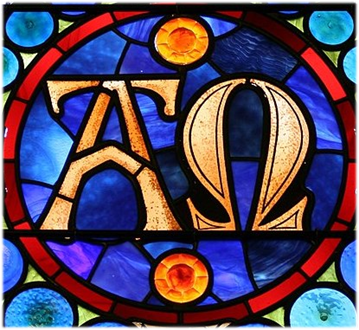
That Rome is not the beginning and end of everything—it is God who is the Alpha and the Omega.
And the overriding imagery of the book of Revelation—indeed, and all of apocryphal literature—is that of a curtain or a veil being pulled back to show something that has always been there, but has been hidden.
And this curtain is pulled back in apocryphal literature to expose a deeper, truer, more benevolent and gracious kingdom than the one that we currently see and live in.
And we call that in the Bible: the Kingdom of God.
Which is not some far-off future fantasy. But, as Jesus said, is “among you”—here and now.
But it’s just—we don’t always see it. We have so much that blocks our view. But every now and then, we get a glimpse. We get a peek that reminds us that there is another reality—that there’s a bigger, more all-encompassing picture.
How many of you know the children’s book Goodnight Gorilla? Okay. It’s the story of a sleepy zookeeper who has his keys nabbed off of him by a gorilla.
And as the zookeeper closes up at night and goes cage to cage to wish the animals goodnight and make sure that they are locked up tightly in their cages—as they are supposed to be—the sneaky gorilla follows the zookeeper and unlocks the cages.
Believe it or not, that image is not far off from that of Revelation, where Jesus is described as the firstborn.
The firstborn of what? The dead.
That’s a juxtaposition if there ever was one, right? The firstborn of the dead—the one who was dead and now is alive forevermore.
He says, “I have the keys… to Death and Hades.”
Jesus is a sneaky gorilla—following the power brokers of this world who think that the cages are all locked up tight for the night, and unbeknownst to them, unlocking the cages as he goes.
That is an apocryphal image.
Friends, in the big picture, the book of Revelation is a reminder—as Brian Webb, who I quoted at the beginning, reminds us—that “the earth is the Lord’s.” It’s not ours.
We’re the zookeeper. We think we’re in charge. And we’re afraid of would-be emperors and kings who go around as if they wield the keys to life and death.
But God, and God alone, is the beginning and the end—the Alpha and the Omega.
And Jesus is the sneaky gorilla with the keys, unlocking the doors between this reality and the Kingdom of God, and giving us a peek at what is really real and what is truly true.
That we, together—collectively—are God’s beloved creation.
And what is good for our neighbors, what is good for creation, what is good for the world—is good for us. Not necessarily the other way around.
You see, we have a chance to be a part of something great—of something magical—if we can only see the truth about who we really are.
Not Americans and Russians or Europeans—but brothers and sisters.
Children of the one who is and who was and who is to come.
So let me close this first sermon in this series with this:
The book is called Revelation—not Revelations, as it’s often misnamed.
Revelation, singular, not plural—because it’s not a series of visions of some scary future. It is a singular vision of the world—of God’s eternal love—that exists just beyond the veil of this present reality.
And the beauty is—you can catch the vision too. And I’m going to guess that you already have.
Do you ever get that feeling that the world as it is… isn’t right?
Do you have the nagging sense that it doesn’t have to be this way?
Instead of war and enmity and estrangement, we are really called at our deepest selves to peace and love and reconciliation.
Do you ever get a glimpse of the way things can be?
Whether it’s a quiet moment of peace by yourself, or the unexpected kindness of a stranger, or just a warm feeling of wholeness and connection with nature and your fellow human being?
Do you have the sense—as author Arundhati Roy writes—“that another world is not only possible, but she is on her way. And on a quiet day, I can hear her breathing”?
If so, welcome to Revelation.
And welcome to the Resistance.
It’s just beginning.
Amen.


