
Sermon Transcript: January 18, 2026
Our scripture lesson today comes to us from the second chapter of John’s gospel verses 13 through 25.
John 2:13–25
The Passover of the Jews was near, and Jesus went up to Jerusalem. In the temple he found people selling cattle, sheep, and doves and the money changers seated at their tables. Making a whip of cords, he drove all of them out of the temple, with the sheep and the cattle. He also poured out the coins of the money changers and overturned their tables. He told those who were selling the doves, “Take these things out of here! Stop making my Father’s house a marketplace!” His disciples remembered that it was written, “Zeal for your house will consume me.” The Jews then said to him, “What sign can you show us for doing this?” Jesus answered them, “Destroy this temple, and in three days I will raise it up.” The Jews then said, “This temple has been under construction for forty-six years, and will you raise it up in three days?” But he was speaking of the temple of his body. After he was raised from the dead, his disciples remembered that he had said this, and they believed the scripture and the word that Jesus had spoken.
When he was in Jerusalem during the Passover festival, many believed in his name because they saw the signs that he was doing. But Jesus on his part would not entrust himself to them, because he knew all people and needed no one to testify about anyone, for he himself knew what was in everyone.
For the Word of God in scripture,
For the Word of God among us,
For the Word of God within us,
Thanks be to God.
***
It was about ten years ago that we were approached as a church by a company that wanted to put a cell phone tower on our roof.
They would handle all the expenses involved in the installation, and the church would be rewarded with a healthy payment each month. All we had to do was let them put it up and reap the benefits. Sounds good, right?
Except, there was fine print, and we had concerns. And ultimately, we declined. It wasn’t for us.
One of my seminary classmates pastors a church out west. The church is next to a major university’s basketball arena. So, every home basketball game, the church offers parking for $10 a spot, and the proceeds benefit the church’s youth and mission ministries.
Pretty smart, right?
One more example of a church engaging in what we might call business. This church is a mega church in the Midwest that one of my friends visited one Sunday. They had a band stage, a big screen up front, a coffee bar in the lobby—he had expected all of that. But what surprised him was the gift shop. When he first saw it, he was a bit curious. What did they sell? Bibles? Cross necklaces?
Yep. And the latest release of the church’s worship band, as well as a signed copy of the head pastor’s latest book.
Surely, such examples of mixing worship and business is what Jesus is opposed to in today’s passage, right? The assumption is that Jesus walks into the temple, sees the money changers, and is enraged at the mix of worship and business. Or maybe that the money changers were taking advantage of the travelers and charging exorbitant rates. I’ve heard that one a lot.
But John doesn’t say anything about corrupt practices, does he?
So we’re left wondering: What has Jesus so angry that he’s flipping over tables and driving out money changers with a whip of cords?
I mean, after all, they’re performing a necessary service. At this time, Passover is a pilgrimage holiday, meaning you don’t celebrate in your local house of worship. You pack your things and your people, and you travel to Jerusalem to visit the temple and make sacrifices. But you can’t carry everything with you, so you need money to buy an animal. And you need local currency to be able to do that.
This is all very routine stuff.
So why would Jesus throw them out?
Then at the end of the passage, we read that the people believed in him because of what? The signs.
That’s when I remembered—John doesn’t deal in miracles. He deals in signs. And so I wonder: What if Jesus going to the temple and causing a scene wasn’t some spur-of-the-moment act? What if he planned it? What if it is a show? Street theater? What if it isn’t about critiquing the mixing of business and worship—but something much, much bigger?
Remember, when we approach scripture, we don’t get out our axes and mine the passage for nuggets of truth. But we immerse ourselves in that world and explore it, and we’re curious, and we ask questions. And when we do that, we find connections.
Like in Zechariah chapter 14, verse 21, which reads: “There shall no longer be traders in the house of the Lord on that day.”
What day? Well, Zechariah is talking about the Day of the Lord—the day when the Messiah would arrive to set things right. Which would explain why John tells us this story up front.
In all of the other Gospels, this is one of Jesus’ last acts of his ministry. It’s literally the straw that breaks the camel’s back that leads to his execution. But in John—we’re only in chapter 2 here. This is at the beginning of Jesus’ ministry.
It’s not the last straw for John, but the announcement—or the sign—of why Jesus is there in the first place. As John will say in a passage we’re going to read next week, Jesus comes not to judge the world, but that we may have life, and have life abundantly in his name.
You see, Jesus isn’t critiquing the necessary practice of business in the temple. This isn’t a dig at Judaism. And it isn’t about cell towers on churches or renting out parking spaces or even, as distasteful as it is, a gift shop shamelessly promoting church staff.
It’s not about any of that.
Jesus is onto something bigger here. Something more along the lines of what the Hebrew scriptures talk about in the Day of Jubilee, where all debts will be forgiven.
Remember, the purpose of Jubilee isn’t economic. It’s theological. It’s so that we will remember that our neighbors are people and not dollar signs—and that we need them as much as they need us.
The Day of Jubilee reminds us that we belong to each other.
So Jesus is saying: when you come to worship, you should not need money as a way to track who is indebted to whom, and who’s the most important among us. He’s not saying that a few corrupt individuals do not belong among God’s people—quite the opposite. He’s saying everyone belongs, and that our whole system of collecting debt and amassing wealth and assigning value has no place in God’s kingdom.
Do you see the difference?
He’s saying that when we truly worship God, we realize that holiness is not confined to a church or a temple—but that everything is holy. Holiness is all around us.
He indicates this too, when the religious leaders confront him and ask: “On what authority are you doing this?” And Jesus’ response confounds them. He says, “Destroy this temple, and I will rebuild it in three days.” They say, “That’s impossible! It’s taken us 46 years and we’re still not done.”
But of course, Jesus isn’t talking about a building. He’s talking about himself.
Rob Bell essentially says, “Listen, I’m going to be killed. That’s where this thing is headed—because you don’t confront corrupt systems of power without paying for it. Sometimes with your own blood.”
So he’s headed to his execution. We don’t get that in the other Gospels until it’s almost over. But for John, it’s right up front.
Debie Thomas writes on the website Journey with Jesus: “Jesus interrupts, as usual, for the sake of justice and holiness. He interrupts worship as usual for the sake of justice and holiness. His love of God, the temple, and its people compels him to righteous anger.” And then she asks this: “If we ourselves are temples—holy places where heaven and earth meet—then what would it be like to work as Jesus does to preserve and protect all bodies, all holy places, all temples from every form of irreverence and desecration?”
After last week’s killing of Renee Good by a federal agent, the bishop of the Episcopal Diocese of New Hampshire announced: “I’ve asked the clergy of the diocese to make sure their affairs are in order and they’ve written their wills. It’s not time for statements. It’s time to put our bodies between the powers of this world and the most vulnerable.”
Of course, that’s what Renee Good herself was doing. She parked her car in the road to block ICE agents. They told her to move. She told them she wasn’t mad at them. Then one of the agents shot. He shot her three times as she attempted to leave.
Her wife, Rebecca, said, “We had whistles. They had guns.”
Describing her wife, she said, “Renee lived by an overarching belief: there’s kindness in the world, and we need to do everything we can to find where it resides and nurture where it needs to grow…Renee was a Christian who knew that all religions teach the same essential truth: we are here to love each other and care for each other and keep each other safe and whole.”
Was Jesus concerned with what happened inside the temple in Jerusalem? You bet he was.
But that’s not the temple he was talking about when he says, “Destroy this temple and I will raise it back up again in three days.”
We should have caught it right there. Did you hear it? He didn’t say rebuild it. He said raise it up.
Jesus insists that his execution would not be the end. Rob Bell says he’s talking about something new and unexpected happening after his death. He’s talking about resurrection.
He continues, he says:
Resurrection says that what we do with our lives matters—in this body, the one that we inhabit right now. Every act of compassion matters. Every work of art that celebrates the good and true matters. Every fair and honest act of business and trade, every kind word—they all belong, and they all will go on in God’s good world.
Nothing will be forgotten. Nothing will be wasted. It all has its place.
Friends, we are living in troubled times. We have whistles. They have guns. But violence is not the answer. That’s just business as usual. The whole system is broken. We need the Day of the Lord. We need Jubilee. We need to destroy the temple so that Jesus can raise it up again.
How do we do that?
Jesus told us and showed us.
We love each other. We care for each other. We keep each other safe as best we can. And we put ourselves on the line for those who are most vulnerable.
Pastor Benjamin Kramer writes, “If your heart is broken and your soul is deeply heavy in these days, that means you haven’t lost your humanity. Even though it’s painful, holding on to our humanity is what is urgently needed right now. Don’t allow the cynicism or cruelty we are witnessing to take that away from you. Love all the more fiercely.”
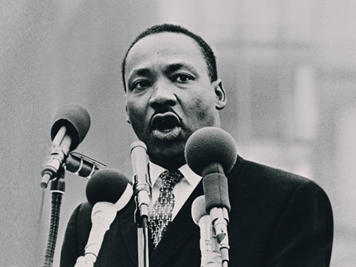
We have the extraordinary examples of Martin Luther King, Jr., Dietrich Bonhoeffer, Nelson Mandela, Renee Good to inspire us; people who literally put their bodies between harm and the most vulnerable.
But don’t forget, they didn’t do it on their own.
They had communities. They had loved ones and neighbors too. People that cared for them and supported them.
Friends, no act is too small if it’s done in love. The world needs our kindness. The world needs our love.
We will not find justice with a gun but with a whistle.
“Destroy this temple,” Jesus says, “and I will raise it up again.”
Amen.


