
Luke 13:1–9, 31–35:
At that very time there were some present who told Jesus about the Galileans whose blood Pilate had mingled with their sacrifices. He asked them, “Do you think that because these Galileans suffered in this way they were worse sinners than all other Galileans? No, I tell you, but unless you repent you will all perish as they did. Or those eighteen who were killed when the tower of Siloam fell on them—do you think that they were worse offenders than all the other people living in Jerusalem? No, I tell you, but unless you repent you will all perish just as they did.”
Then he told this parable: “A man had a fig tree planted in his vineyard, and he came looking for fruit on it and found none. So he said to the man working the vineyard, ‘See here! For three years I have come looking for fruit on this fig tree, and still I find none. Cut it down! Why should it be wasting the soil?’ He replied, ‘Sir, let it alone for one more year, until I dig around it and put manure on it. If it bears fruit next year, well and good, but if not, you can cut it down.’”
At that very hour some Pharisees came and said to him, “Get away from here, for Herod wants to kill you.” He said to them, “Go and tell that fox for me, ‘Listen, I am casting out demons and performing cures today and tomorrow, and on the third day I finish my work. Yet today, tomorrow, and the next day I must be on my way, because it is impossible for a prophet to be killed outside of Jerusalem.’ Jerusalem, Jerusalem, the city that kills the prophets and stones those who are sent to it! How often have I desired to gather your children together as a hen gathers her brood under her wings, and you were not willing! See, your house is left to you. And I tell you, you will not see me until the time comes when you say, ‘Blessed is the one who comes in the name of the Lord.’”
For the Word of God in scripture,
For the Word of God among us,
For the Word of God within us,
Thanks be to God.
***
We just did an adult ed class on good news. And it strikes me that two of the things in our scripture lesson today could have been ripped from the headlines—not good news, but rather tragic news.
There are three distinct sections in our reading today, and it’s hard to figure out how they’re all together, if there’s a thread that goes between all of them. In this first section, there’s bad news right off the bat.
This crowd informs Jesus that Pilate has murdered some Galileans who were in the midst of ritual sacrifice. By bringing this to Jesus’ attention, the crowd’s hoping for Jesus to make some sense of it. Why would God allow this to happen? Did they die this way because they are sinners?
As a quote on our bulletin cover points out, we expect Jesus to be an answer man, but he rarely, if ever, provides a clear answer that just lets us off the hook. More often, he further complicates whatever the scenario or question is and puts the onus back on us—back on his audience—to consider at a deeper level.
And such is the case in today’s reading as well. Jesus reminds the crowd of another recent event ripped from the headlines. A tower fell and killed eighteen people. Jesus asks the crowd if these eighteen people deserved to die more than anyone else. The clear answer is, of course not.
Sometimes things just happen. Tragic events, injustices. Sometimes innocent people die without cause or reason. Sometimes power-hungry leaders act cruelly, and people suffer as a result—even die—because the leader could simply care less.
To lay such things at the feet of God or seek to make sense of them by blaming the victims is a fruitless and frustrating approach. The lesson Jesus suggests we take from this is that none of us are immune from such tragedies. Any one of us could lose our lives tomorrow—without warning or preparation. And if that were to happen, would we die in right relationship with God? With others? Or are we putting off those things because we think we have more time?
Jesus’ message to the crowd is repent for you never know when your time is up.
The word repent has a lot of baggage for us nowadays, doesn’t it? It’s come to mean something like, “Confess your sins, all of the bad things that you’ve done, so that God will not punish you.”
That’s hardly what Jesus means by it. The word repent literally means just turn around. The Common English Bible translates repent as change your hearts and lives. And the implication isn’t simply more realistic—it’s deeply, fundamentally relational. Spiritual.
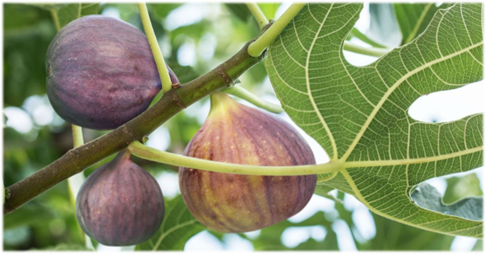
The second part of our passage today is Jesus telling this parable of a fig tree. Essentially, there’s a fig tree that’s not producing fruit, and the owner is just tired of waiting, tells the gardener to chop it down. The gardener asks the owner for one more year—to prune it, to nourish it. One more season to allow it to produce its desired fruit.
It’s significant that the owner says he has come for three years because the first three years for the tree are simply for it to take root and grow. It shouldn’t be expected to bear fruit just yet. So at best, this is the first year that the owner could rightfully expect figs. So his call to cut it down is a bit premature.
So if we put these first two scenes together, we have something about this tension between urgency and patience.
The third scene plays with this tension as well, as the crowds warn Jesus that Herod’s out for him. They want him to flee to safety. But Jesus responds by directing the crowd to tell Herod that Jesus just doesn’t have time for such foolishness. He still has work to do. He’s doing what God sent him to do.
Yet, he also acknowledges that there’s an inevitability to this clash between Jesus and Herod. He knows that he’s putting himself in danger and that it may even mean the end of his life. Still, that doesn’t seem to be the main concern of Jesus. He’s more concerned about the work that he has to do. The work that God has called him to do.
Comedian and activist ALOK was on The Daily Show this last week, promoting their new comedy special called Biology. The title topic of the special is a pushback on the idea that those who oppose LGBTQIA+ rights and dignity do so for purely biological reasons.
Alok says, “Transphobia is just a distraction from our shared humanity. We should be talking about the fact that we’re all going to [bleeping] die.”
They go on to say, “The real biological truth in our society is our mortality. But we try to pretend that that is not the case.”
They say, “From the perspective of death, all living is stand-up comedy, because death is kind of looking at us like, ‘Oh, it’s so funny and so cute that you think that new pair of shoes is going to keep you from dying.’”
I dare say that ALOK’s message is similar to Jesus’. Surprising, right?
And that’s the actual link here between all of these scenes. We’re focusing on the wrong thing.
Life is a precious gift, but we don’t know how much of it we get. We can’t live in denial of death, but neither can we live in fear of it.
Living in light of our mortality reminds me of the old saying about the best time to plant a tree was thirty years ago, and the second-best time is now.
If there are things we’ve been putting off, we should do them as soon as possible. If there are relationships that need repairing in our lives, if there are amends that we need to make, if there are changes we need to make to our own hearts and lives, we should feel the urgency to do those things.
At the same time, we should have patience, as the poet Rilke says, “Patience toward all that is unresolved in our hearts.”
Urgency doesn’t mean that we have to have it all together right now. We need to give ourselves time to spread our roots and grow.
Our own mortality should not have us fleeing in fear or keep us from doing the work that God is calling us to do.
In other words, why are we waiting one more second to live as anyone other than our genuine, God-breathed selves?
God made you to be exactly who you are. And if you—if we—are living into any other version of ourselves, and let’s be honest, we all are, then the call is clear for us this Lent: It’s time to change our hearts and lives.
Because in creating you to be who you are, God did not make a mistake. There is a reason. We have work to do. We have purpose to fulfill.
And that’s what we grieve, right? When lives are cut short tragically.
But there are many who are alive who, either by choice or circumstance, live as if they were already dead. And that is contrary to the will of God.
Because Jesus, as the gospel writer John reminds us, came so that we—all of us—may have life, and have it abundantly.
Thanks be to God. Amen.


