
Sermon Transcript: February 2, 2025
Luke 6: 1-16
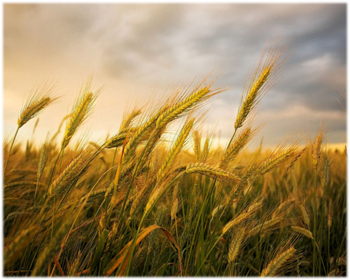
One Sabbath while Jesus was going through some grain fields, his disciples plucked some heads of grain, rubbed them in their hands, and ate them. But some of the Pharisees said, “Why are you doing what is not lawful on the Sabbath?” Jesus answered, “Have you not read what David did when he and his companions were hungry? How he entered the house of God and took and ate the bread of the Presence, which it is not lawful for any but the priests to eat, and gave some to his companions?” Then he said to them, “The Son of Man is lord of the Sabbath.”
On another Sabbath he entered the synagogue and taught, and there was a man there whose right hand was withered. The scribes and the Pharisees were watching him to see whether he would cure on the Sabbath, so that they might find grounds to bring an accusation against him. But he knew what they were thinking, and he said to the man who had the withered hand, “Come and stand in the middle.” He got up and stood there. Then Jesus said to them, “I ask you, is it lawful to do good or to do harm on the Sabbath, to save life or to destroy it?” After looking around at all of them, he said to him, “Stretch out your hand.” He did so, and his hand was restored. But they were filled with fury and began discussing with one another what they might do to Jesus.
Now during those days he went out to the mountain to pray, and he spent the night in prayer to God. And when day came, he called his disciples and chose twelve of them, whom he also named apostles: Simon, whom he named Peter, and his brother Andrew, and James, and John, and Philip, and Bartholomew, and Matthew, and Thomas, and James son of Alphaeus, and Simon, who was called the Zealot, and Judas son of James, and Judas Iscariot, who became a traitor.
For the Word of God in scripture,
For the Word of God among us,
For the Word of God within us,
Thanks be to God.
***
I want to take a moment and thank you all. Thank you for allowing me to preach to you week after week. Thank you for showing up. Thank you for listening. Thank you for affirming and challenging me. I hope I have never taken the privilege for granted, but recent events have reminded me how important and how peculiar it is that we do this on a regular basis.
One comedian describes preaching as giving a book report every week on the same book and trying to find something new to say. While that is funny, I am not sure it’s all that accurate. The bible is more than a book, it is an ancient, and we believe holy, library. And a sermon is more than a book report. But what is it?
Maybe there is a clue in the responses pastors receive after their sermons. On any given Sunday, the most frequent response I get is, “I enjoyed today’s message.” I have uttered these words myself in response to sermons I have heard. But is a sermon entertainment? Not really. I hope that it is not boring, but the point is certainly more than entertaining you for 15 minutes.
Another one I have heard, and think is maybe a bit more to the point, is to compare a sermon to a meal. Even if you don’t enjoy a meal, it can nourish you. So, one might say, “that sermon really fed my spirit.” Or negatively, “I am still leaving here hungry.”
Or what about the language of a workout? “That was challenging.” “You had me sweating there for a few minutes.” “I feel stronger than when I came in.”
Maybe there is no perfect corollary, but today’s passage has me pondering what it is we do here, and how our expectations might shape the experience.
There is a story of a person who travelled hours on a Sunday morning to hear a famous preacher who was about to retire. It turns out the sermon that day didn’t do much for her. On the way out, she shared her disappointment with the preacher. “I drove all this way to hear you, but I have to be honest, I didn’t get much out of it.” The old preacher responded without missing a beat, “What did you bring to it?”
What are our expectations for this time we spend every week? I ask, because as I was reading today’s passage, I was struck by how often Jesus’ listeners are offended by his sermons. The people of Jesus’ hometown were so mad they wanted to throw him off a cliff. Often his disciples are befuddled. It’s not always bad. After all he keeps attracting a crowd. But still it seems like half the time, Jesus upsets people. I would love to overhear the comments he received as people came up to him later.
The Pharisees are none to pleased with what Jesus has to say in today’s reading. But we need to tread carefully here. Too often the Pharisees are used as a prop in our reading of the Gospels. We hear the word Pharisee and we already have in mind who we are talking about. (legalistic, letter of the law, judgmental, etc.) But to better understand what is going on in today’s passage, I think we need to set those preconceptions aside.
Luke is sure to tell us that the encounter we read today is between Jesus and SOME Pharisees. Not all Pharisees. Some of them. Presumably others might have reacted differently. Luke is reminding us that Pharisees are not a uniform, homogeneous group. Even amongst themselves there are differing opinions on the topic at hand.
And the topic at hand is a big one: observing the Sabbath. There may be no bigger, more important discussion in Judaism throughout the years than the Sabbath. It is at the very heart of the Jewish relationship to God.
As Christians we often think of Sabbath as a day set apart to worship God. But Walter Brueggeman reminds us, “Sabbath, in the first instance, is not about worship. It is about work stoppage. It is about withdrawal from the anxiety system of Pharaoh, the refusal to let one’s life be defined by production and consumption and the endless pursuit of private well-being.”
Too often you and I think of Sabbath as the rest at the end of week for of work, our reward, our respite for our production and busyness. In the Jewish understand, Sabbath is the beginning, it is the first and most important thing about who we are. We are not the creators, we are part of the creation. Our value, our worth, our being is not our own doing but a gift from God. Sabbath is not our reward for doing all the work, it is the starting point that gives our work meaning and purpose.
The practice, then, of Sabbath keeping is crucial to our relationship with God. Without it, we will continually fall into the trap of our value being associated with our production and consumption.
And so when SOME Pharisees, see Jesus disciples plucking grain and eating it on the Sabbath, they are rightly worried that not just are they violating the letter of the law, but the very heart, core, and spirit of it.
In other words, they are engaging in an age-old dialogue that continues even to this day. How is sabbath to be observed? Where are the lines that are not to be crossed? Are there any exceptions? And if so, what are they? Do they apply to everyone or only some?
Likewise, Jesus is not telling the Pharisees, “Your silly Sabbath rules don’t apply to me and my followers.” He is simply saying, “I disagree with where you draw that particular line.” And at the heart of where the line is drawn for Jesus is the concept of mercy. The key question in our passage is, “I ask you, is it lawful to do good or to do harm on the Sabbath, to save life or to destroy it?”
It is not that Jesus does not believe in Sabbath observance, he just believes that as John Carrol puts it, “to do nothing when mercy is required, is to do harm.”
So even mercy itself is not without controversy. Mercy for who? When should it be applied? When should it be withheld? Is it only for the deserving? Are we all required to show mercy to others? Or are some of us exempt from that call? Some view mercy as weakness or over-tolerance. Others view it as the highest good.
We need look no further than recent headlines to be reminded that mercy is not something we all agree on. During a morning prayer service, Bishop Budde asked the President to have mercy on those who are afraid with his recent executive orders, afraid of what might happen to them or their loved ones.
Many have applauded her for her courage and fortitude. Others have called her a charlatan or a political puppet. The President said she was nasty, rude and out of line. It is easy for us to respond by jumping in our preferred corners and pointing blame at the other. But where does that get us? Better to ask the old preacher’s question, about what we bring instead?
I happen to believe Bishop Budde was well within her means to call for mercy. She stands in a long line of prophets and priests who ask kings and rulers to have mercy on those under their care. She is also in a long line of people who suffer for it.
Really we should NOT be surprised that our President took offence—not because of who he is—but because itself mercy can be quite offensive. It asks us to set aside our power, our privilege, our sense of what is right and what is fair, who is deserving and who is not. It asks us to judge, not based on what has already transpired, but to trust in what might yet be. Mercy does not leave us unscathed. It does not leave us feeling entertained or amused. It challenges us. It pushes us to widen our circles of kindness and compassion ever and ever wider, even past our comfort or what we are told is acceptable or permissible.
And that is hard to swallow. If we are honest, it is offensive to our normal way of being in the world. But it is also at the very heart of the Gospel, because that is what God has done for us. God does not treat us fairly. God does not give us what we deserve. Richard Rohr puts it succinctly when he writes, “every time God forgives us, God is saying that God’s own rules do not matter as much as the relationship that God wants to create with us.”
The relationship God wants to create with us is not one of power over, not of blind obedience, not even of fairness. It is one of grace and mercy. It is that relationship, that reality, to which Sabbath points us. Where we rest, not in ourselves or the work of our hand, but in the givenness of God.
This is what we celebrate at this table, and why we come here as often as we can. To be reminded that it is not our doing, but God’s giving on which our very lives depend.
Walter Brueggeman writes, “I have come to think that the moment of giving the bread of Eucharist as gift is the quintessential center of the notion of Sabbath rest in Christian tradition. It is gift! We are on the receiving end, without accomplishment, achievement, or qualification. It is a gift, and we are grateful! Imagine having a sacrament named ‘thanks’!”
And so let us come to the table, to be fed in body and spirit, to be challenged in heart and mind, to be surprised by who else we might find here at the Lord’s table, until we realize that we all rely upon the very same thing: the offensive mercy of the God who loves us into loving.
Amen.


